Upright membrane that stops roots crossing a line.
Free photo ID check · Mon–Fri 8am–6pm, Sat mornings
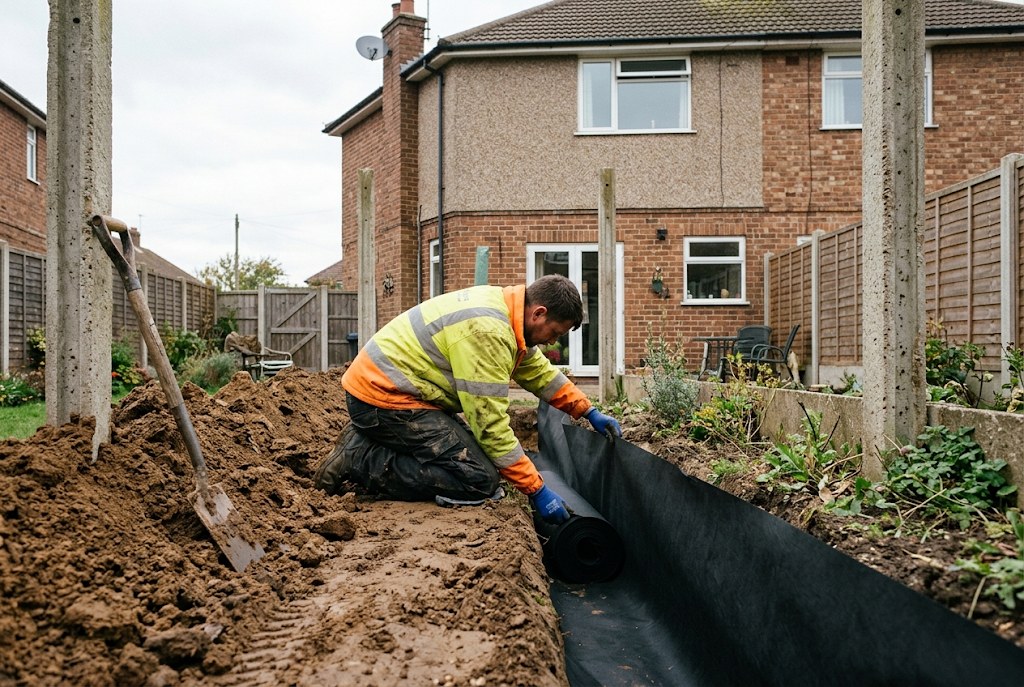
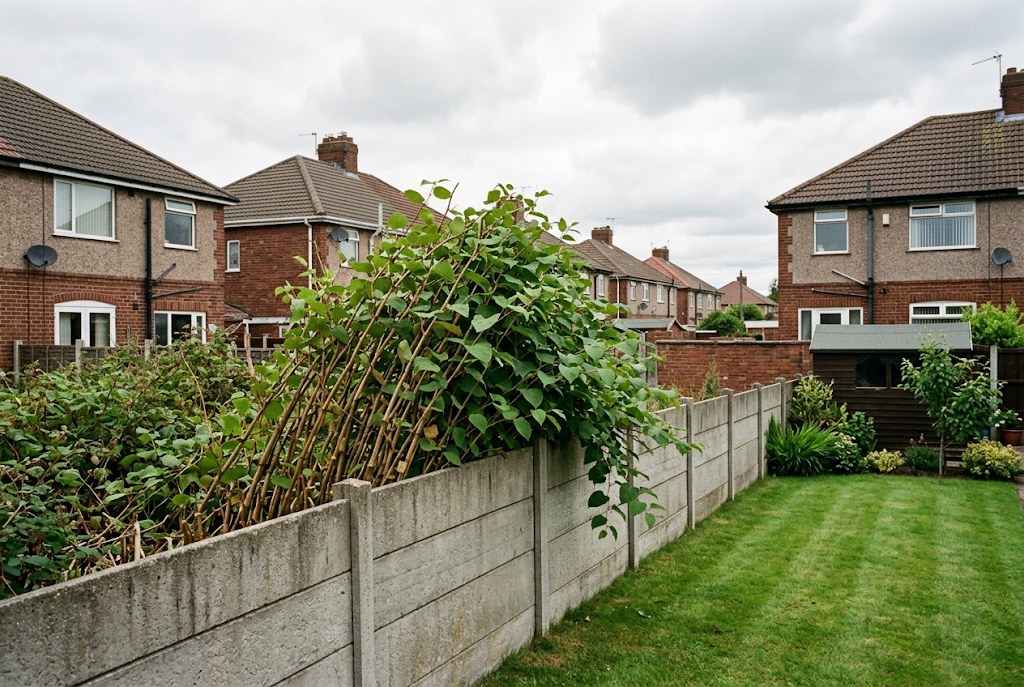
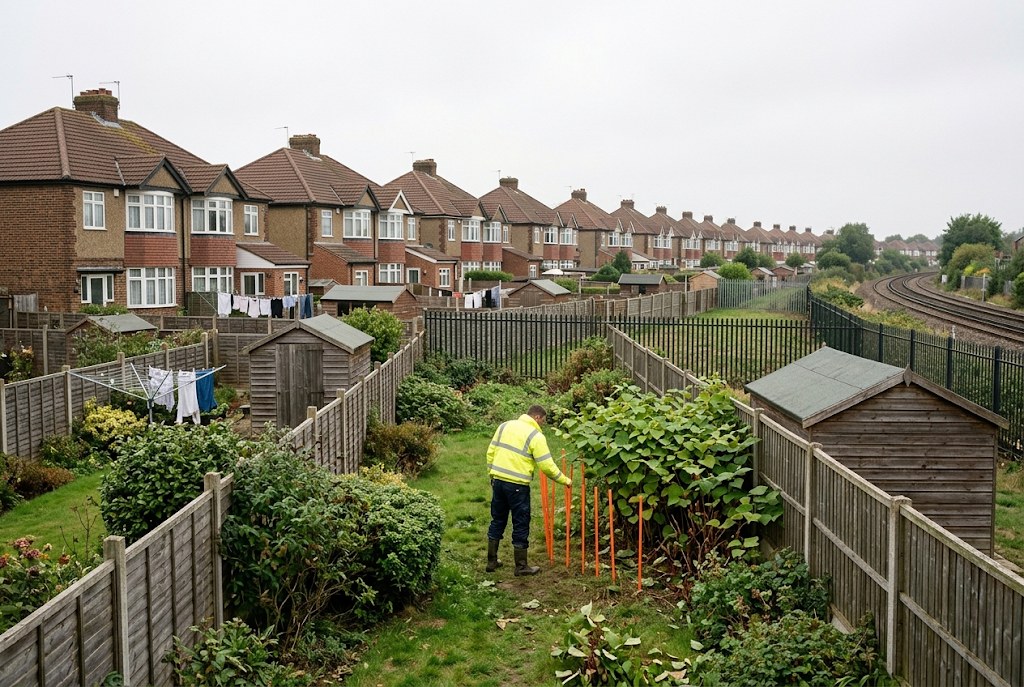
A root barrier is heavy-duty membrane set upright in a dug trench along a boundary or around a structure. It is useful when the stand sits behind a fence and cannot be reached from your side, or when new building work needs protecting. The membrane stops the roots, but the stand itself still needs treatment.
Barriers suit situations where the stand cannot be treated at source, such as land you do not own, or where new foundations, paving or a drive must be protected. They also help on sloping ground where roots travel downhill.
A trench is dug to the required depth, usually a metre or more, and the membrane fixed upright against the side facing the stand, with joints overlapped and sealed. The trench is then backfilled. Depth and overlap are what make a barrier work, so these are checked and photographed.
A barrier stops roots crossing a line, but it does not kill the plant. The stand still needs treating, or the problem simply sits on the other side. We usually recommend a barrier as part of a wider plan rather than on its own.
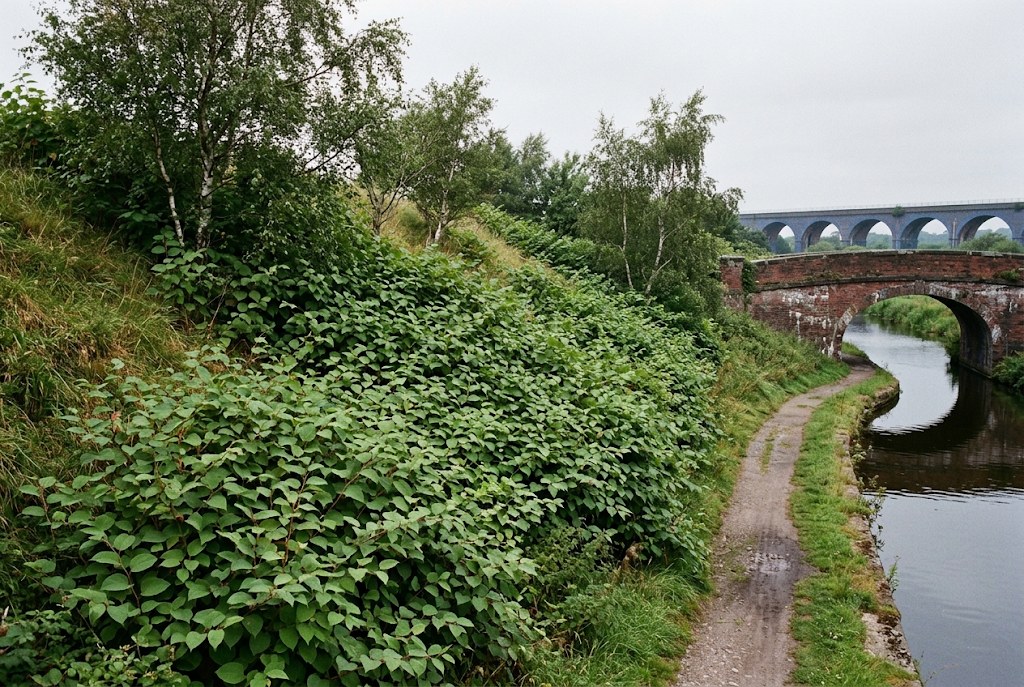

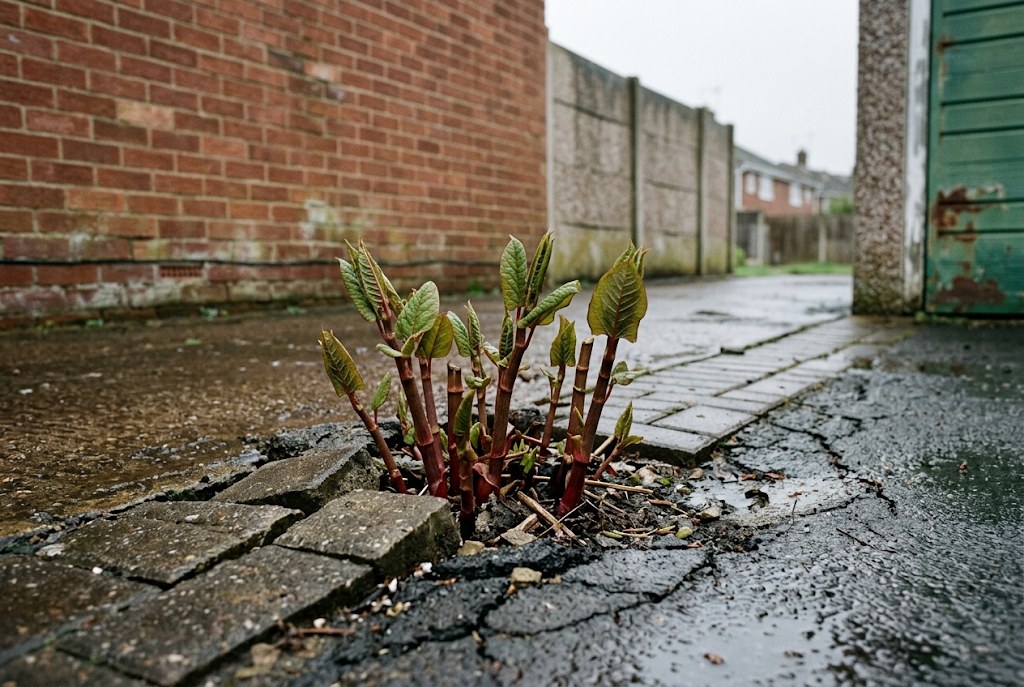
One leaf and a length of stem will do. Use the contact form or message us. No cost.

If it is knotweed we come out, measure the stand and record what is near it.
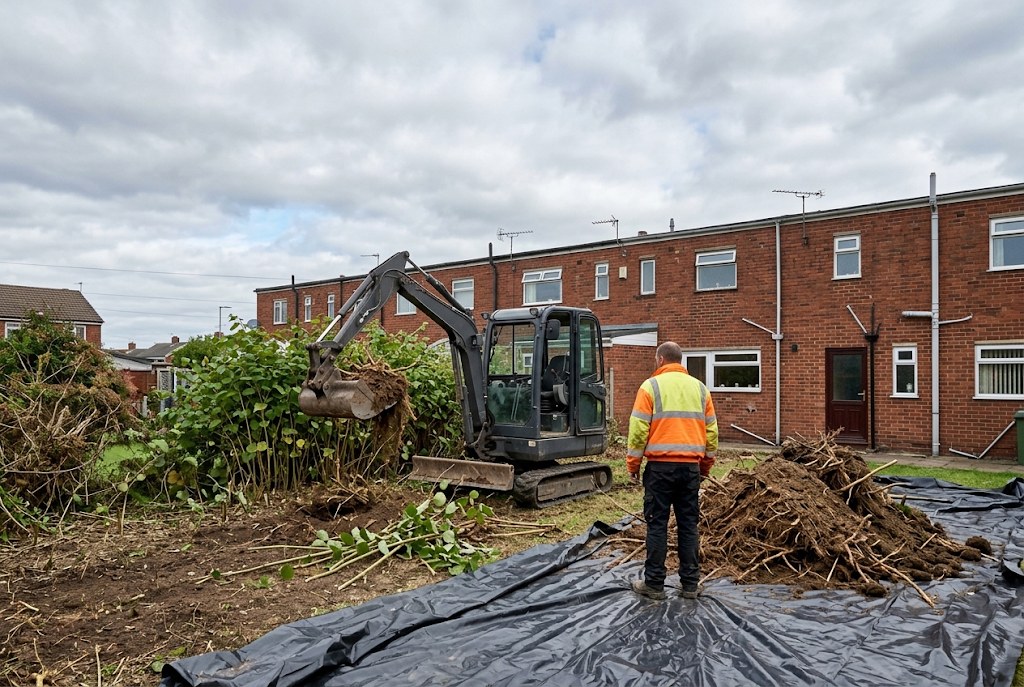
Treatment over several seasons, or excavation when the calendar will not wait.
A written plan for you and your lender, plus return visits until nothing regrows.
Every job starts with a free photo check. If a visit is needed, you get a written quote before any work starts — no obligation, no surprises.
Eccleston· Windle· Thatto Heath· Parr· Rainhill· Haydock· Newton-le-Willows· Sutton· Blackbrook· Clock Face
 Knotweed survey A site visit to confirm the plant and map the stand.
  Free knotweed ID from a photo Send a picture and we tell you what it is, for nothing. Knotweed plan for mortgages and sales The management plan lenders and buyers ask to see. Knotweed from next door A dated record of where it is and which way it is heading. Knotweed spraying programme Herbicide treatment across several seasons, with return visits. Knotweed excavation Digging out the stand and its roots in a matter of days.
  Knotweed on building plots Surveys and removal for St Helens development land. Knotweed for landlords Surveys and treatment for rented houses and flats.